By Carla Calleja, MBA, REB
Guess the price
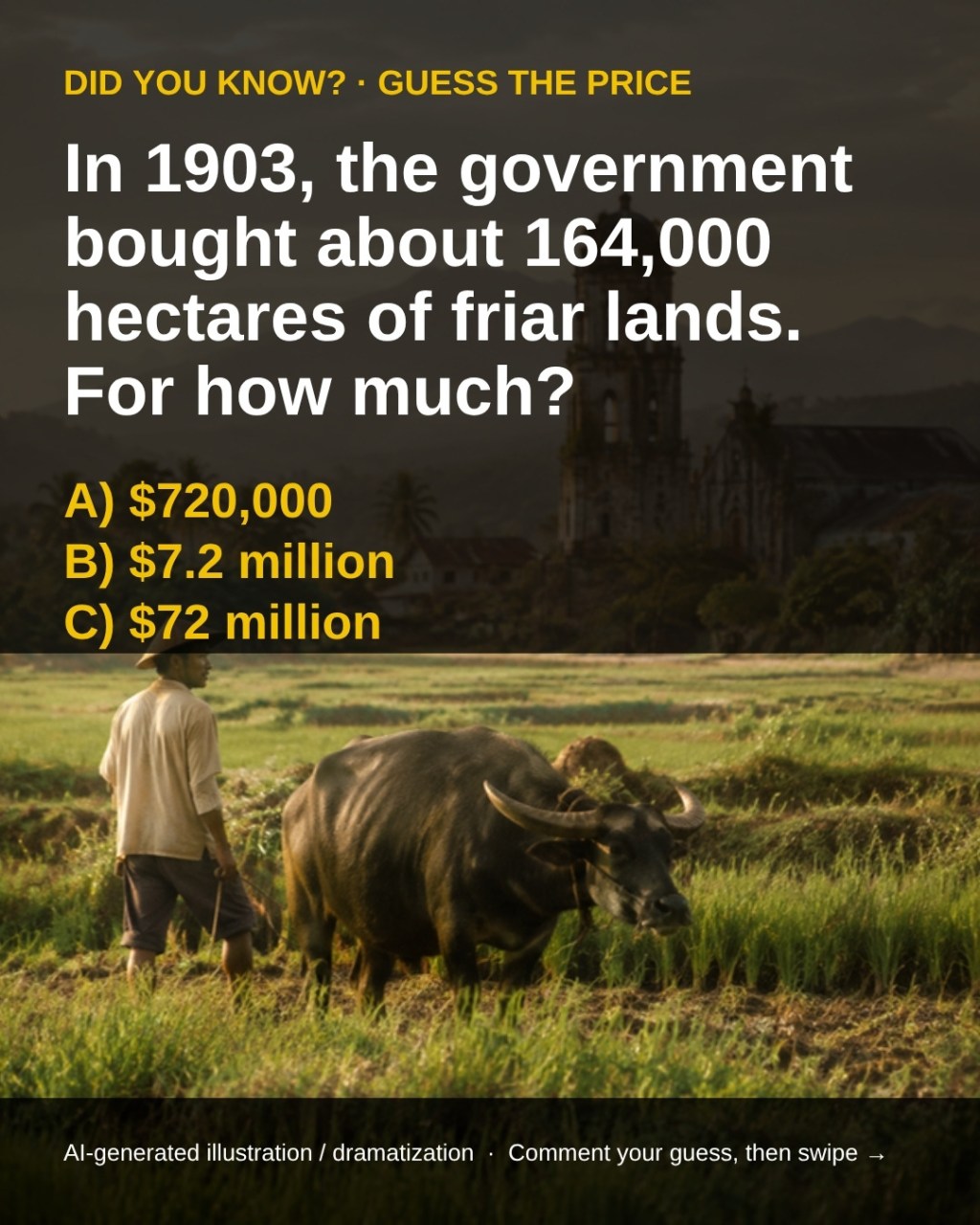
In 1903, the government agreed to buy about 164,000 hectares of land from the religious orders. That is a huge area, spread across several provinces. How much do you think it cost? A) $720,000, B) $7.2 million, or C) $72 million?
The short answer
B. The preamble of Act No. 1120, the Friar Lands Act, says the government contracted on December 22, 1903 to buy about 164,127 hectares for US$7,239,784.66, roughly US$7.24 million. That works out to about US$44 per hectare. Encyclopaedia Britannica gives the rounded figures of about $7 million and about 170,000 hectares.
The full story
During the Spanish period, religious orders held large agricultural estates, often worked by tenant farmers. Britannica names the Dominicans, Augustinians and Recollects as the orders that owned these lands. Disputes between tenants and the orders over these estates became a major issue at the turn of the 20th century, known as the “Friar Lands Question.”
The solution of the new American colonial government was to buy the estates and resell them. Act No. 1120 was enacted on April 26, 1904 to administer and sell these lands. Its preamble lists the provinces where the estates were located: La Laguna, Bulacan, Cavite, Bataan, Cebu, Rizal, Isabela and Mindoro.
Who could buy, and how
- Occupants first. The law gave actual settlers and occupants preference to lease or buy the land they were already working.
- At cost, in installments. Under Section 11, a qualified occupant could buy at the government’s actual cost and pay in equal annual installments over up to ten years, with 4% annual interest on deferred payments. Section 13 allowed paying in cash or in fewer years.
- Title after full payment. Under Sections 12 and 15, the government kept title until the last installment and interest were paid, then conveyed the land to the buyer.
Britannica notes that the resale to tenant farmers on an installment basis led to disputes over surveys and repayment terms, and that the broader land reform issue stayed contentious for decades.
What this means for property owners today
- Every title has a family tree. Some lots in the provinces named above trace their history to these estates. A title’s history can matter when you buy, sell or settle an estate.
- Check the chain. Before buying land, request a certified true copy of the title from the Registry of Deeds and ask about its origin and previous titles.
- History explains value. Large estates that were divided and resold often became today’s towns, subdivisions and business districts.
FAQ
What are friar lands?
They are agricultural estates once owned by Spanish religious orders, which the government bought in the early 1900s and resold, mainly to the occupants.
What law governs friar lands?
Act No. 1120, the Friar Lands Act of April 26, 1904, set the rules for administering, leasing and selling these lands.
Where were the friar lands?
Act No. 1120 names eight provinces: La Laguna, Bulacan, Cavite, Bataan, Cebu, Rizal, Isabela and Mindoro.
How do I know if my land was once friar land?
Start with a certified true copy of your title and trace earlier titles at the Registry of Deeds. A lawyer or geodetic engineer can help with older records.
Ask Broker Carla
Got an old title or a land history question? Comment FRIAR on my posts, message me at facebook.com/carlacallejabrokerphilippines, or email buyrentph@gmail.com.
Sources
Cover image: AI-generated illustration / dramatization, not a historical photo.

