By Carla Calleja, MBA, REB
The story: “Bakit tumaas na naman ang dues namin?”
Every year I hear the same question from condo owners in Makati and BGC, and from homeowners in subdivisions all over the country: why do our monthly association dues keep going up? Part of the answer is something most owners never see on their bill: real property tax (RPT) on the common areas — the lobby, the hallways, the parks and open spaces that everyone shares. A new Senate bill wants to change that.
The short answer
Not yet — but they could. On October 21, 2026, Sen. Francis “Chiz” Escudero filed Senate Bill No. 2569, which proposes to exempt the common areas of residential condominiums and subdivisions from real property tax. It is only a bill. It still has to go through committee hearings, pass both houses of Congress and be signed into law before anything changes.
What the bill proposes
- What it amends: Section 234 of Republic Act No. 7160, the Local Government Code of 1991 — the section that lists which properties are exempt from real property tax.
- What would be exempt: all portions of a residential condominium or subdivision that are duly designated or recognized as common areas. Reported examples include hallways, lobbies and parks.
- The important condition: the exemption would not apply to common spaces used for commercial or income-generating activities. A space converted for business stays taxable.
- Why: According to the senator’s office, the RPT on common areas is typically passed on to homeowners’ associations and condominium corporations, which raises monthly dues. Removing it could lower dues for condo and subdivision residents.
Sen. Escudero chairs the Senate Committee on Urban Planning, Housing and Resettlement, the same committee that recently pushed several housing measures through the Senate this October.
Who is affected?
- Condo unit owners — through the dues collected by your condominium corporation.
- Subdivision homeowners — through your HOA dues, where roads, parks and open spaces are maintained.
- HOA and condo corporation boards — who prepare budgets and would need to reflect any tax savings.
- Developers — who often carry common areas before turnover to the association.
- Tenants — indirectly, since dues often factor into rent.
- Local government units — which would collect less RPT if the bill becomes law.
What this means for you: a checklist
- Don’t stop paying. Until a law is passed and implemented, your association’s tax obligations and your dues stay the same.
- Ask for the breakdown. Request your HOA or condo corporation’s annual budget and see how much goes to real property tax on common areas.
- Check what is income-generating. Leased stalls, function rooms rented to outsiders or parking sold to the public may stay taxable even if the bill passes.
- Watch the hearings. Bills can change in committee. The final text matters more than the filed version.
- Selling or buying a unit? Look at the dues history and the association’s financial statements — they affect value and monthly cost.
FAQ
Is Senate Bill 2569 already a law?
No. As of this writing it has only been filed (October 21, 2026). It still needs committee hearings, approval by the Senate and the House, and the President’s signature.
Will my dues automatically go down if it passes?
Not automatically. Dues are set by your association’s board based on its budget. If the RPT on common areas disappears, owners can ask the board to reflect the savings.
Does this exempt my own unit or my house and lot?
No. The bill covers common areas only. Your own unit, house or lot remains subject to real property tax.
What if our clubhouse or pool is rented out to non-residents?
Under the bill as reported, common spaces used for commercial or income-generating activities would remain taxable.
Ask Broker Carla
Got a question about your dues, your condo corporation or your property taxes? Comment DUES on my post, message me on Facebook at facebook.com/carlacallejabrokerphilippines, or email buyrentph@gmail.com. I answer one public question every week.
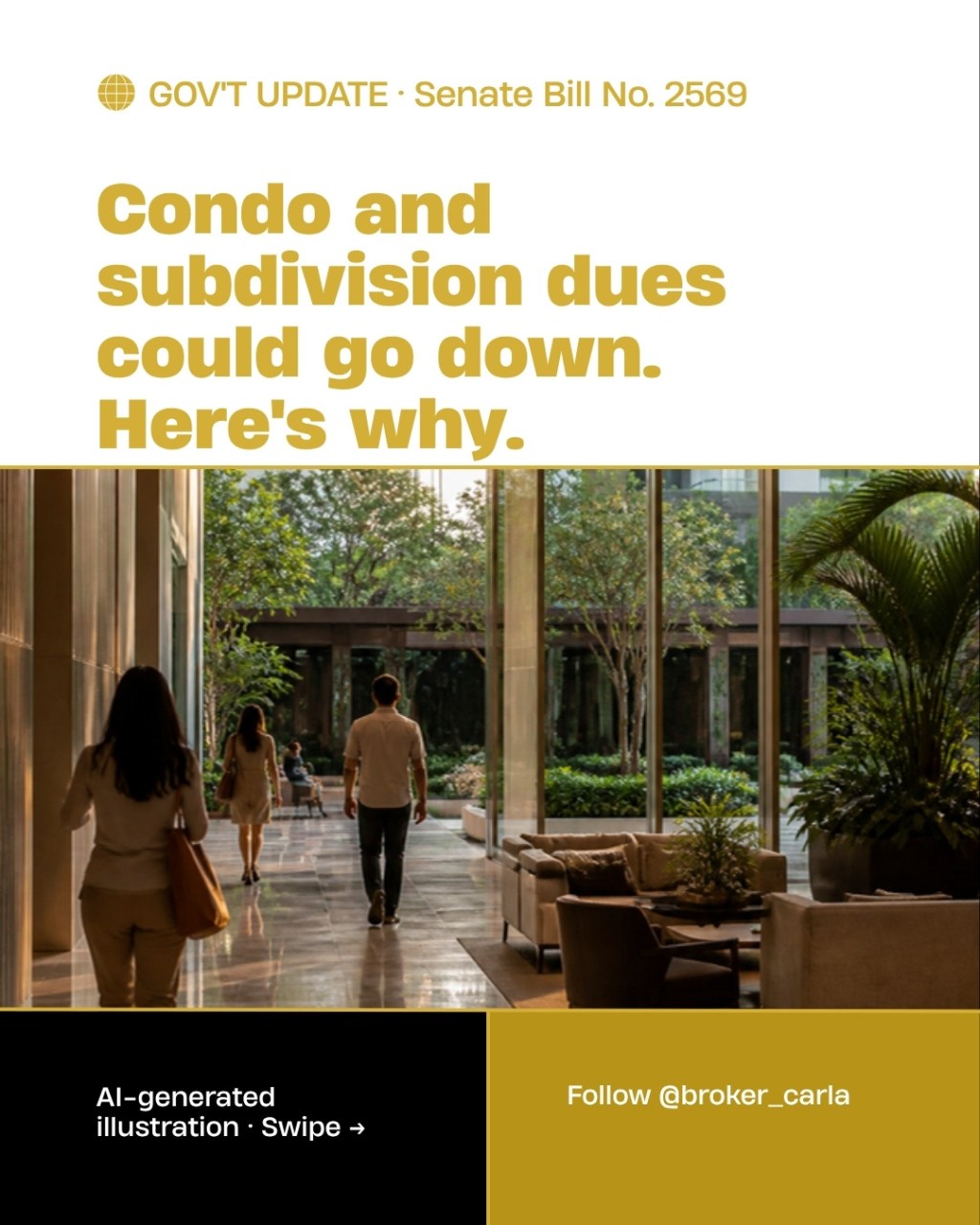
Carla Calleja, MBA, REB · PRC License 0021912 · DHSUD Accred. No. 0024330. The cover image is an AI-generated illustration.
This article is for general information only and is not legal or tax advice. For your specific situation, consult a lawyer or a licensed professional.
Sources
- Office of Sen. Escudero: Chiz proposes to exempt subdivision, condo common areas from real property taxes (Oct. 22, 2026)
- Journal News Online: Escudero seeks real property tax exemption for subdivision, condo common areas (Oct. 22, 2026)
- The Manila Times: Escudero seeks tax exemption for subdivision, condo common areas (Oct. 23, 2026)
- Republic Act No. 7160, Local Government Code of 1991 (Sec. 234)

