By Carla Calleja, MBA, REB
“Broker Carla, tataas ba ang hulog ko?” After the Bangko Sentral ng Pilipinas (BSP) announced another rate hike last week, this is the question I am hearing most from homeowners, OFWs and buyers who are about to apply for a loan. Let me explain what happened, who is affected, and what you can do this week.
The short answer
It depends on your loan. If your bank housing loan is still inside a fixed-rate period, your monthly amortization does not change today. If your loan is about to reprice, or if you are about to borrow, you may face a higher rate, because banks can pass higher policy rates on to borrowers. If you are a Pag-IBIG member, check the Fund’s promotional rates before they end on December 31, 2026.
What changed
- On October 22, 2026, the BSP’s Monetary Board raised its policy rate by 50 basis points, from 5.00% to 5.50%.
- The Daily Tribune reported it as the fourth straight hike and the biggest since February 2023. Economists polled before the meeting had mostly expected a smaller 25-basis-point move.
- The reason: September 2026 inflation reached 7.2%, a three-year high, with oil prices, transport fares and possible El Niño effects on food prices pushing the outlook up.
- BSP Governor Eli Remolona Jr. said the central bank remains open to further hikes at its December meeting.
Who is affected
The policy rate is not your loan rate, but it influences what banks charge. Context.ph noted that commercial banks are expected to pass the increase on to consumers through higher payments on mortgages and other loans. In practice, these groups should pay attention:
- Borrowers whose bank housing loans are about to reprice. Most bank home loans are fixed for 1, 3, 5 or more years, then reprice at the bank’s prevailing rate.
- Buyers about to apply for financing, including those turning over a pre-selling unit and shifting from in-house or developer terms to a bank loan.
- OFWs paying amortizations from abroad, who should budget for a possible increase at repricing.
- Investors buying for rental income, because a higher rate changes your cash flow and yield.
The Pag-IBIG option: promo rates until December 31, 2026
In June 2026, Pag-IBIG Fund announced promotional home loan rates under the Expanded 4PH program, as reported by the Daily Tribune and the Philippine Daily Inquirer:
- 3% subsidized rate for socialized housing borrowers under the Expanded 4PH program.
- 4.5% per year, fixed for 3 years, for loan amounts above the socialized housing price ceiling and up to the ₱2.5 million low-cost housing ceiling.
- 5.75% per year, fixed for 3 years, for amounts above ₱2.5 million and up to ₱10 million.
- After the 3-year fixing period, the loan reprices based on the repricing period the borrower chose.
- The promo covers applications received until December 31, 2026.
Pag-IBIG rates are set by the Fund, not directly by the BSP, so always confirm the rate that applies to you with your Pag-IBIG branch or the Virtual Pag-IBIG portal before you decide.
What to do now: a 5-step checklist
- Find your repricing date. Look at your loan agreement or promissory note, or call your bank.
- Ask your bank in writing for its current fixed-rate options (1, 3 and 5 years) and any repricing or prepayment fees.
- Compute your new amortization at a rate 0.5 to 1 percentage point higher than today, so you are not surprised.
- If you are a Pag-IBIG member, compare the promo rate for your loan amount before December 31, 2026, including whether a loan takeout or refinancing makes sense for you.
- If you are buying, get your loan pre-qualification early and build a cushion into your budget.
What this means for you
- Fixed-rate borrowers are protected until repricing. Use that time to plan.
- Variable or soon-to-reprice borrowers should compare options now, not on the repricing date.
- Sellers and buyers: higher rates can lengthen the time it takes to sell a property that relies on bank-financed buyers. Price and terms matter more.
FAQ
Will my monthly amortization go up right away?
Not if your rate is still fixed. Changes usually apply at repricing or to new loans. Check your loan documents.
Does the BSP rate hike change Pag-IBIG’s rates?
Pag-IBIG sets its own rates. Its announced promo rates run for applications received until December 31, 2026. Confirm with Pag-IBIG before applying.
Is it a good time to buy?
That depends on your budget, financing and how long you plan to hold the property. A licensed broker can help you compare total costs, not just the price.
Will rates go up again?
The BSP said it is open to more hikes at its December meeting. No one can promise the direction of rates, so plan with a buffer.
Ask Broker Carla
May tanong ka rin? Comment RATE on my posts, send your “Broker Carla, …” question to my Facebook page at facebook.com/carlacallejabrokerphilippines, or email buyrentph@gmail.com.
This article is for general information only and is not legal or tax advice. For your specific situation, consult a lawyer or a licensed professional.
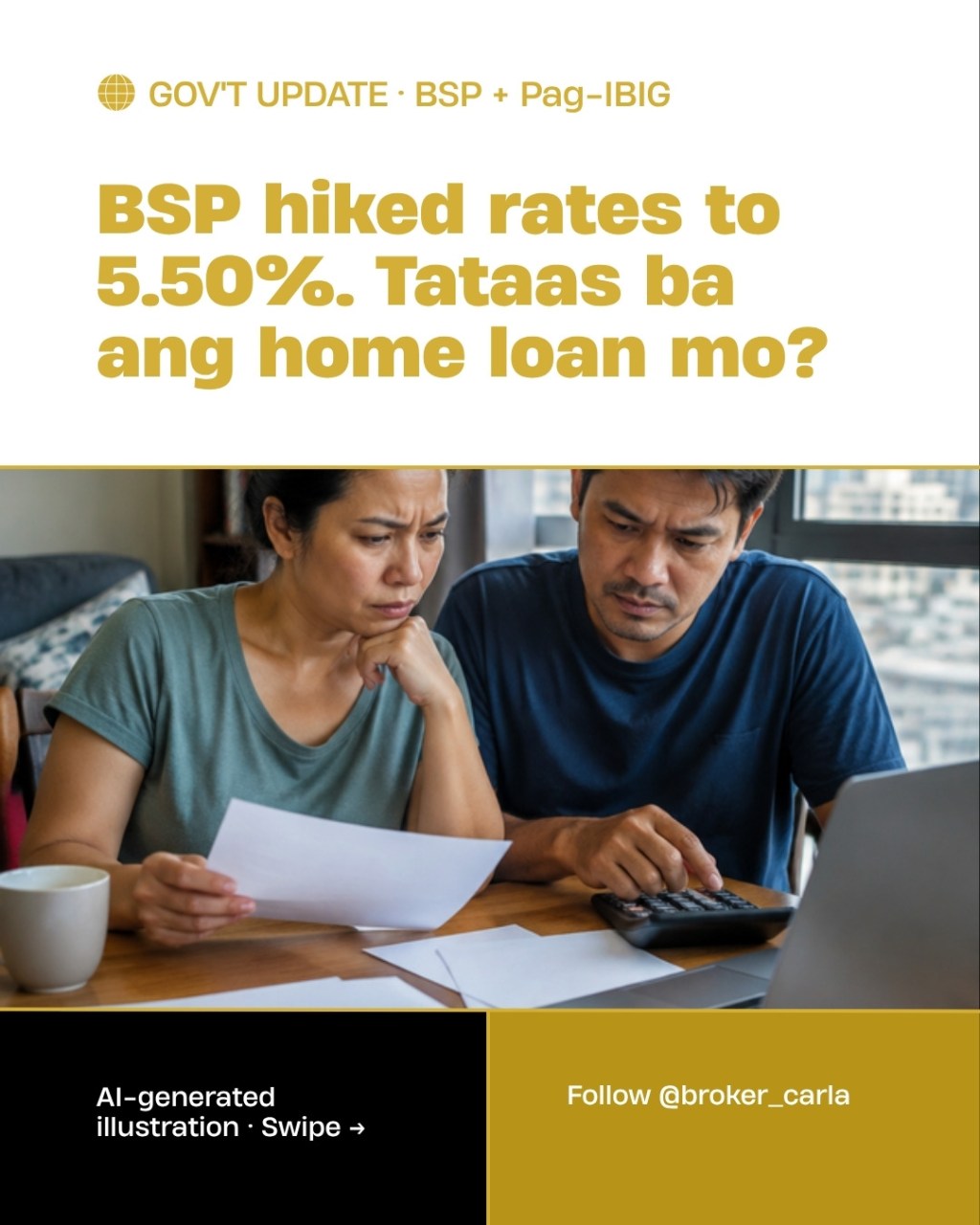
Image: AI-generated illustration.
Sources
- Daily Tribune: BSP delivers jumbo 50-basis-point rate hike (Oct. 22, 2026)
- Context.ph: BSP delivers 50-basis-point rate hike to 5.50% (Oct. 22, 2026)
- Philstar: Poll, another hike in BSP rates looms (Oct. 19, 2026)
- Daily Tribune: Pag-IBIG lowers home loan rates under Expanded 4PH (June 18, 2026)
- Inquirer: Pag-IBIG Fund offers promo home loan rates (June 19, 2026)

