By Carla Calleja, MBA, REB
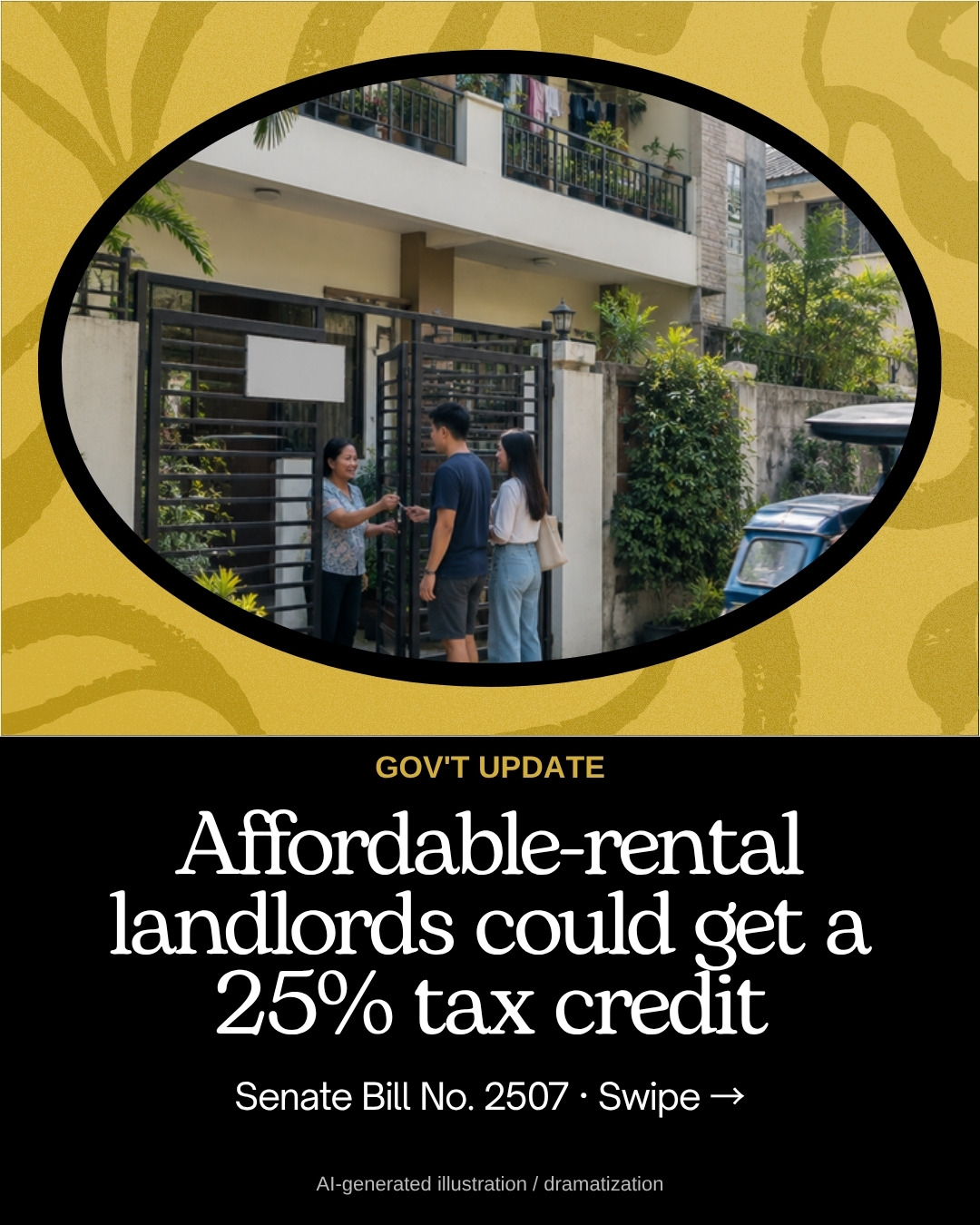
Cover image: AI-generated illustration / dramatization.
The story: Aling Nena’s three-door apartment
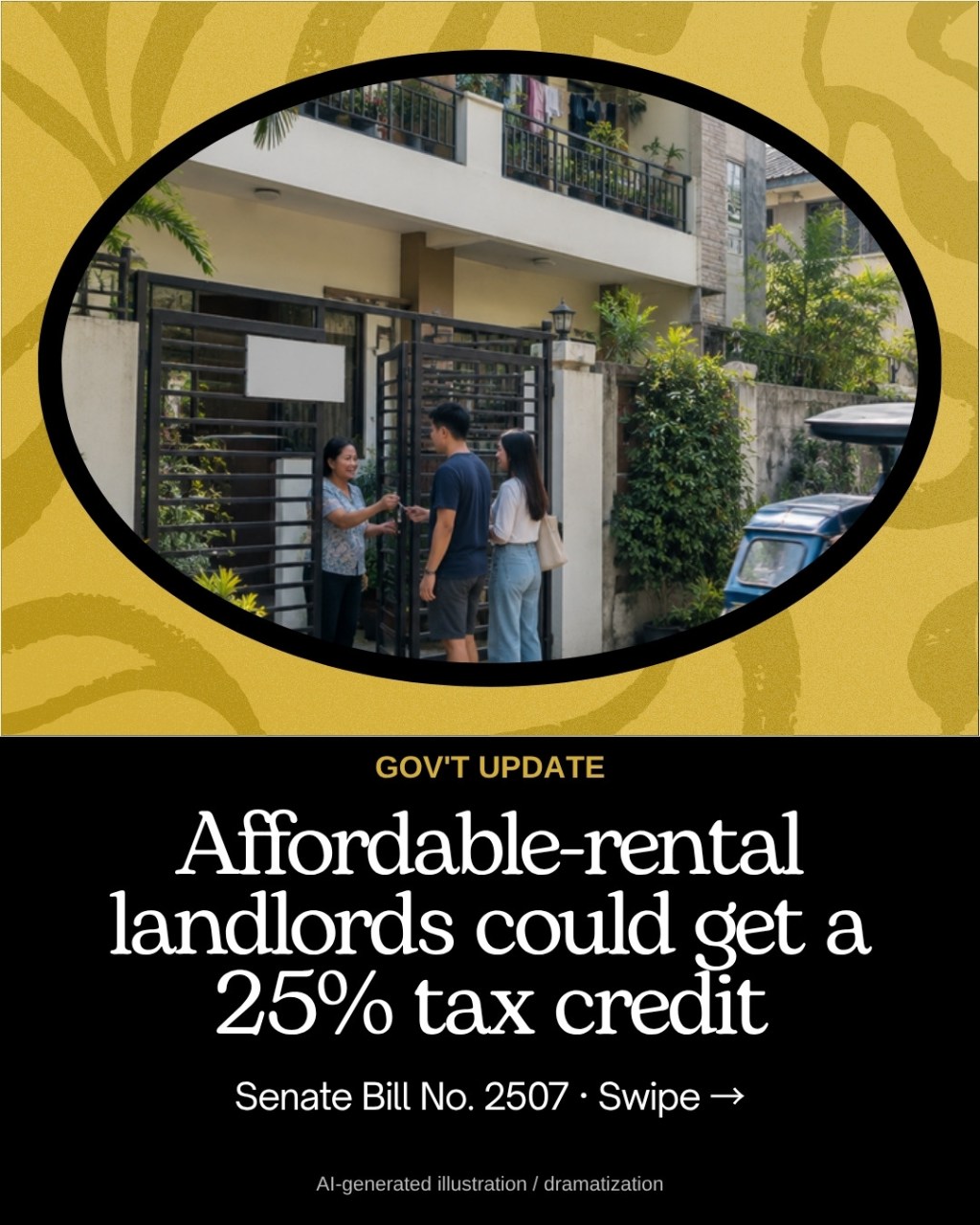
Aling Nena owns a small three-door apartment in a Metro Manila barangay. Her tenants are a jeepney driver’s family, a young couple who both work in a mall, and a call-center agent. She keeps the rent low because she knows them, but every year the repairs, real property tax and dues get heavier. “Paano kaya kung may tulong ang gobyerno sa mga nagpapaupa nang mura?” she asked me once.
A bill now moving in the Senate tries to answer exactly that question.
The short answer
Senate Bill No. 2507, the proposed Affordable and Decent Rental Housing Incentives Act, sponsored by Sen. Francis “Chiz” Escudero, was approved on second reading in the Senate in early October 2026. It proposes tax and financing incentives, including a 25% tax credit on gross rental income for five years, for registered and certified rental units leased to poor and low-income households. It is not yet law. It still needs third reading, a House counterpart, a bicameral version if the texts differ, and the President’s signature.
What the bill proposes
Based on reports of the sponsorship and second-reading approval, SB 2507 would:
- Create a registration and certification system for qualified rental housing providers.
- Require units to meet DHSUD standards. DHSUD would set rental rates based on household income, prevailing local rents, and unit size and type.
- Limit incentives to qualified units leased to poor and low-income households.
- Offer a VAT exemption on qualified leases.
- Extend tax incentives under the CREATE Act (RA 11534).
- Give a tax credit of 25% of gross rental income for five years.
- Provide preferential lending from Pag-IBIG Fund, Land Bank and the Development Bank of the Philippines, plus credit guarantees, interest subsidies and viability gap funding.
- Open government land and assets for affordable rentals through usufruct, lease, concession or public-private partnership.
The stated goal is to increase the supply of affordable rental units rather than simply regulate rents. As Sen. Escudero put it in his sponsorship, “The Constitution itself recognizes that the challenge of housing cannot be met by government alone.”
Who is affected
- Developers and rental operators who are willing to build or rehabilitate units for low-income renters.
- Small landlords like Aling Nena, but only if their units register, get certified, meet DHSUD standards and are leased within the set rent levels. Not every landlord will qualify.
- Tenants, especially minimum-wage and low-income families, who could see more decent rental options.
- Investors looking at mass-housing rentals, who will want to watch the final rent caps and certification rules.
What to do now (step by step)
- Don’t change your tax filings yet. There is no tax credit until the bill becomes law and implementing rules are issued.
- Put your rental paperwork in order. Written lease contracts, official receipts, BIR registration and real property tax payments will matter if you want to qualify later.
- Know your unit. Check whether your property meets basic safety and habitability standards. Certification will likely require it.
- Watch for the third reading and the House version. Rent levels, eligibility and the definition of “low-income” can still change.
- Talk to a tax professional before restructuring your rentals around a proposed incentive.
What this means for you
- Landlord: this could reward you for keeping rents affordable, but only through a formal, certified system.
- Tenant: more supply is the goal, but nothing changes in your lease today.
- Investor: watch the implementing rules before buying units for this purpose.
FAQ
Is Senate Bill 2507 already a law?
No. It was approved on second reading in the Senate in early October 2026. It still needs third reading, House action and the President’s signature.
Can any landlord claim the 25% tax credit?
Under the bill as reported, only registered and certified rental units leased to poor and low-income households, at DHSUD-set rental standards, would qualify.
Will my rent go down because of this bill?
Not directly. The bill aims to increase the supply of affordable units through incentives. It does not cut existing rents.
Who sets the rent for qualified units?
DHSUD would set the rental rate standards based on household income, prevailing local rents, and unit size and type.
Ask Broker Carla
Are you a landlord, tenant or investor wondering how this bill affects you? Comment RENTAL on my post, message me on Facebook at facebook.com/carlacallejabrokerphilippines, or email buyrentph@gmail.com. Send me your own “Broker Carla, …” question.
This article is for general information only and is not legal or tax advice. For your specific situation, consult a lawyer or a licensed professional.
Sources
- SunStar: Senate advances incentives for affordable rental housing (Oct. 8, 2026)
- The Manila Times: New housing bill to boost affordable rentals for poor families (Oct. 5, 2026)
- Iloilo Metropolitan Times: Chiz pushes incentives for developers to build affordable rental housing (Oct. 5, 2026)
Carla Calleja, MBA, REB
Licensed Real Estate Broker · PRC License 0021912 · DHSUD Accred. No. 0024330

